Articles
Why the Search Box was Never Built for Homebuyers
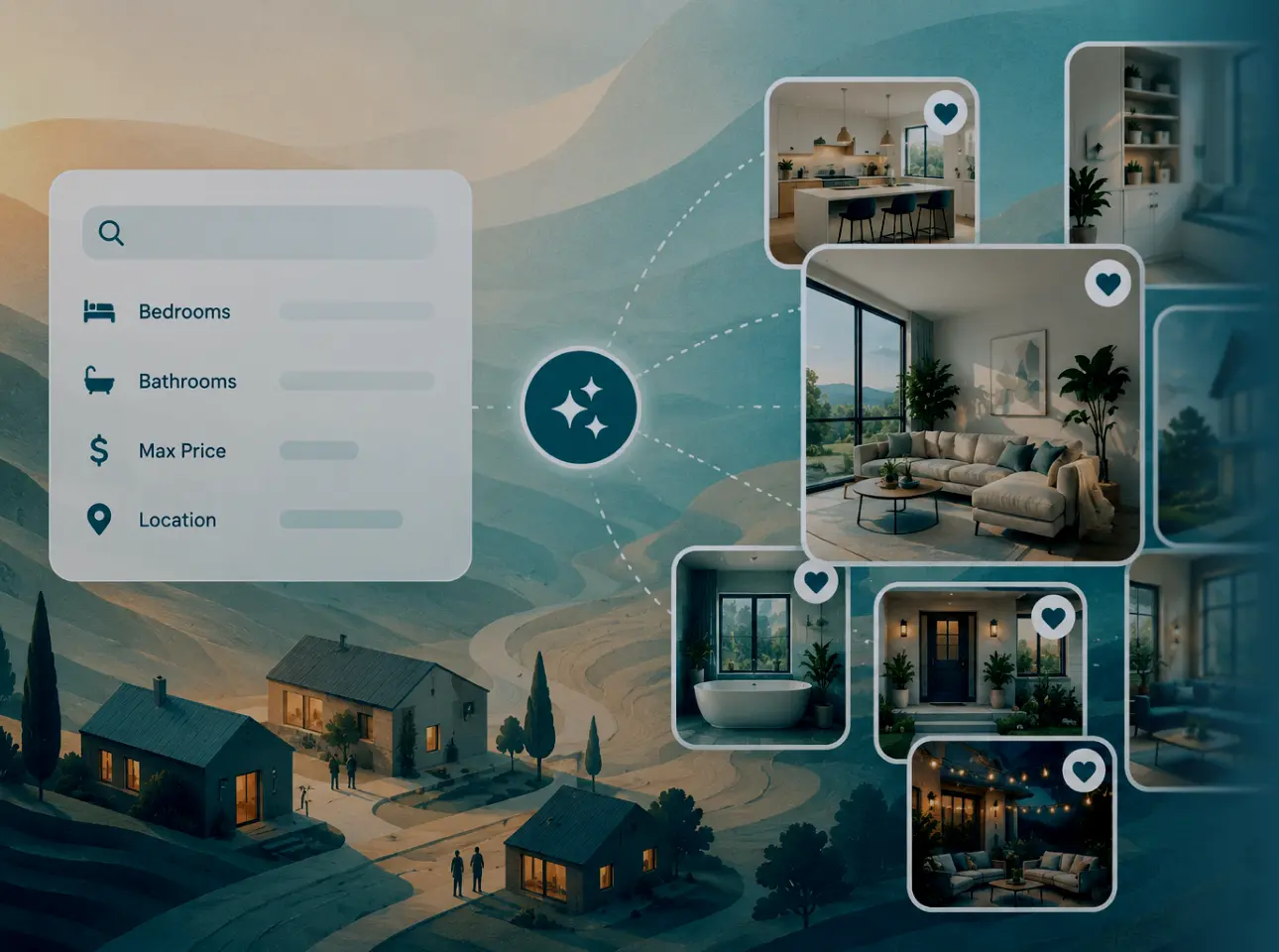
Every home search begins with a question that most buyers aren’t actually able to answer: What are you looking for?
Three bedrooms. Two bathrooms. Under $650,000. Open floor plan. Good schools.
It sounds logical. After all, that’s how we’ve searched for information online for decades. You define exactly what you want, apply a few filters, and let the results roll in.
However, the problem we are running into is that buying a home doesn’t truly work that way. Most buyers don’t understand what matters to them until they start exploring.
Yet today’s search experience expects them to know their priorities before they’ve had the chance to discover them.
That’s not a buyer problem. It’s a product of how real estate technology was originally built.
Search was designed around databases, not people.
The modern home search experience traces its roots back to MLS databases, where listings were organized around structured fields and standardized information. The goal wasn’t to inspire buyers or uncover preferences. It was simply to organize inventory.
As those systems evolved online, the experience largely stayed the same.
The search box became the starting point. Filters became the primary way to narrow results. And buyers were expected to define what they wanted before they truly knew.
The homes you save tell a much richer story.
Think about how people actually shop for a home.
Very few fall in love with a property just because it checked every box on a spreadsheet. Instead, they notice things they weren’t actually searching for.
Maybe it’s the natural light in the kitchen. The reading nook beneath a staircase. The mature oak trees in the backyard.
Maybe it’s the exposed brick, oversized windows, or the feeling they get when they imagine spending a Sunday morning there.
These aren’t preferences buyers usually type into a search bar.
They’re discovered.
And once they’re discovered, they become part of the buyer’s evolving understanding of what “home” really means.
Discovery should come before definition.
The traditional search experience asks buyers to define their criteria first and explore second.
But the reality is that exploration is what shapes those criteria.
Every home viewed, every listing saved, every detail revisited provides new information about what someone values.
The best search experience shouldn’t simply respond to filters. Instead, it should learn from behavior.
It should recognize patterns that buyers don’t even realize they’re creating and use those insights to surface homes that may have otherwise been overlooked.
The future isn’t better filters.
For years, real estate platforms have focused on adding more search options.
More checkboxes. More dropdowns. More ways to narrow results.
But adding more filters doesn’t solve the underlying issue if buyers are still guessing what they want.
The next generation of home search isn’t about asking better questions.
It’s about listening more carefully to the answers buyers are already giving through the homes they explore, save, revisit, and compare.
When technology understands preferences instead of just processing requirements, searching starts to feel a lot less like work, and a lot more like discovery.
At Propified, that’s the future we’re building toward. Because finding the right home shouldn’t begin with forcing buyers into predefined boxes. It should begin with helping buyers understand and explore what truly feels like a home.